Why Your Face Changes First When You Lose Weight after 40 — and How to Protect It
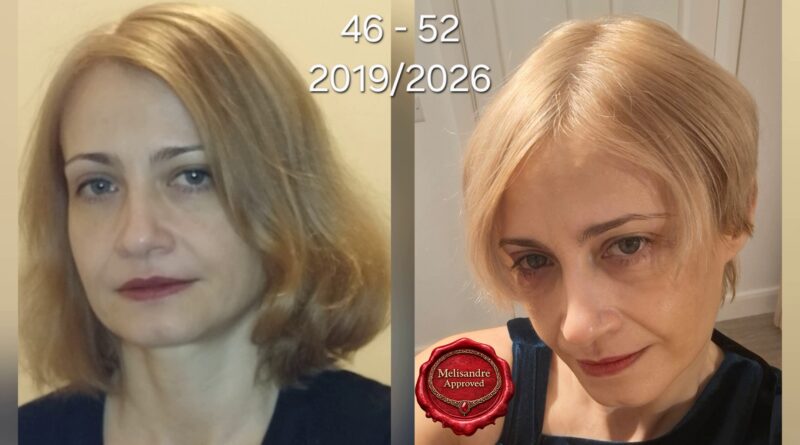
I was 45, catabolic, and in horror: I lost weight — and my Face lost the argument.
The Day I Realised Fat Loss after 40 Can Age Your Face
In 2019, at 45 years old, I finally stopped “being a gym subscriber” and started actually training.
No more casual workouts.
No more “I’ll start properly next Monday.”
No more politely orbiting the treadmill and hoping for miracles.
I was going to the gym seriously.
Training — not dabbling. From one or two sessions per week… to three… then four… then five.
This escalation began shortly after the infamous “Getting Into My Pants Dance” — that wiggly, humiliating ballet I once performed while trying to squeeze winter fluff into skinny jeans, under the amused and highly entertained supervision of my husband. (I’ve told that story in full here, and yes — it was as glamorous as it sounds.)
March 2019 became the turning point.
Research began.
Books were bought.
Macros were adjusted.
Workouts structured.
Progress tracked.
And because efficiency is one of my defining traits — admirable on paper, mildly toxic in practice — I decided:
“If I’m going to train seriously, I might as well drop those 5–6 kilos.”
I was 163 cm tall and hovering around 55–56 kg.
I wanted to return to my pre-pregnancy 50–51 kg.
It sounded logical.
Disciplined.
Very grown-up.
So, I increased my training volume to five days per week.
And, I reduced calories — not dramatically, but consistently enough to create a steady deficit.
The weight dropped quickly.
I was proud.
Until the day I glanced down into the mirror lying flat on my bedside table.
And I froze.
The Melisandre Moment
If you’ve watched Game of Thrones, you’ll remember Melisandre — the Red Woman with the enchanted necklace.
Necklace on?
Ethereal.
Glowing.
Ageless in that suspicious, otherworldly way.
Necklace off?
Ancient.
Collapsed.
Skin folding into time as if gravity had been waiting patiently for centuries.
That was me.
For one second — one long, cold, horrifying second — I saw my face sliding downward.
Thinner?
Yes.
But also… sagging.
Not sculpted.
Not lifted.
Not radiant.
Deflated.
As if the internal scaffolding had quietly moved away.
And unlike Melisandre, I did not possess a magic necklace. There was no enchanted reset button.
(And if you haven’t watched Game of Thrones — please do. Strictly for educational purposes.)
I stepped back.
Checked the wall mirror.
“Fine,” I told myself.
Different angle. Different lighting. Completely fine.
But it wasn’t.
Something had shifted.
Subtly. Structurally.
And nobody had warned me that when you lose weight after 40… your face often volunteers first.
What could I do?
Research.
The Real Problem: I Was Catabolic
Here is what I didn’t understand at 45.
I wasn’t in a building phase.
I was in a catabolic state.
Training five days a week.
Reducing calories.
Not prioritising sufficient protein.
Not yet understanding progressive overload properly.
Not fully appreciating recovery.
Catabolism means breakdown.
When energy intake is consistently lower than expenditure — and recovery is insufficient — the body does not selectively burn “unwanted fluff.” It doesn’t politely remove the bits you dislike and preserve the rest.
It breaks down tissue.
Yes, fat.
But also muscle.
And connective support.
Including the subtle musculature and fat pads that give the face structure.
I wasn’t building muscle.
I was eroding structure.
And when structure decreases in a 45-year-old woman, gravity becomes very enthusiastic.
Why the Face Often Changes First — In Women and Men
After my “mirror moment,” I went digging.
And I discovered something many people quietly notice but rarely understand: fat loss often becomes visible in the face before it becomes obvious in the lower body.
Fat loss is systemic — you cannot spot reduce (well… you can influence stubborn areas to some extent, and I’ve written about that here). But overall fat distribution and release patterns are hormonally influenced.
Several factors explain why the face may change early:
- Facial fat pads are relatively small and metabolically active.
- The face has dense blood supply.
- Upper-body fat depots are often more responsive to lipolytic signals.
- Lower-body fat — especially in women — is more resistant due to higher alpha-2 adrenergic receptor density.
In simple language?
For many people, fat tends to leave from the top down.
Women often retain gluteofemoral fat (hips and thighs) longer because estrogen encourages storage there.
But men are not exempt.
As testosterone gradually declines with age, men experience:
- Reduced collagen synthesis
- Reduced muscle mass
- Changes in fat distribution
- Decreased dermal thickness
Testosterone supports structural integrity just as estrogen does — in different ways. When it declines, facial volume can also diminish more quickly during a deficit.
So whether you are male or female, after 40 the buffer is thinner.
Less collagen.
Less muscle.
Less structural reserve.
And the face reveals it first.
Why It’s Amplified After 40
After 30, collagen production declines by roughly 1% per year.
After 40 — especially in women entering peri-menopause — the decline accelerates.
- Collagen synthesis drops more sharply
- Elastin fibres fragment
- Bone remodeling subtly alters facial support
- Recovery capacity decreases
At 25, a calorie deficit is often well tolerated.
At 45?
Your biology negotiates.
If you combine:
- A calorie deficit
- High training volume
- Insufficient protein
- Inadequate recovery
You are not “shredding.”
You may be deconstructing.
Which brings us back to abs.
The Abs Myth — And the Face Parallel
I used to believe:
“Abs are made in the kitchen.”
No.
Abs are revealed in the kitchen.
They are built in the gym.
And the same structural law applies to the face.
Muscle provides support.
When I dieted aggressively without properly building muscle, I reduced volume without reinforcing structure.
My arms became smaller.
My legs slimmer — but shapeless.
There was no six-pack.
And my face looked thinner — and sagging.
Not stronger.
I hadn’t sculpted.
I had subtracted.
That was the mistake.
So What Do You Do If You Want to Lose Fat After 40?
You prepare structure first.
Not just calories.
Structure.
Here is exactly how I do it now — in order.
My Structural Protocol (In Sequence)
1️⃣ Immediately Upon Waking — Injuv® Hyaluronic Acid (Mandatory for Me After 45)
This is non-negotiable for me now.
I take Injuv® hyaluronic acid first thing in the morning, typically 140 mg (providing 12.6 mg natural hyaluronic acid), in cycles of 45 days on, 15 days off.
Not just any HA.
Injuv is a low-molecular-weight, bioavailable form designed for systemic absorption.
Why it matters:
Hyaluronic acid is particularly fascinating.
One HA molecule can bind up to 1,000 times its weight in water.
That’s not cosmetic marketing.
That’s biochemistry.
HA is responsible for skin turgor — that subtle internal “bounce.”
As we age, natural HA levels decline.
So when facial fat reduces, collagen is lower, and HA is reduced…
You don’t just look slimmer.
You can look deflated.
It’s not vanity.
It’s structural biology.
For me, after 45, supporting hydration at the dermal level is essential — especially during periods of higher training intensity or mild caloric deficit.
Bonus: HA also supports joint lubrication, which becomes increasingly relevant as load increases in the gym.
For me — mandatory.
2️⃣ 10–15 Minutes Later — Collagen (Essential) + Optional Amino Reinforcement
Then I take:
- 10 g collagen peptides
- 1–2 g glycine
- 1–2 g proline
- 1–2 g lysine
Collagen itself is essential in my protocol.
The additional glycine, proline, and lysine are optional reinforcements — useful, but not obligatory.
Collagen provides:
- Structural amino acids
- Support for dermal matrix
- Support for tendons and ligaments
- Improved elasticity and density over time (supported by clinical data)
Lysine supports collagen cross-linking.
Glycine supports connective tissue integrity and nervous system balance.
Proline is fundamental in collagen structure.
I also dissolve a small amount of effervescent Vitamin C with my collagen powder.
Vitamin C is a required cofactor for collagen synthesis — without it, your body cannot properly form stable collagen fibres.
It’s a small addition, but biologically meaningful.
If you plan to enter a calorie deficit, begin collagen support at least 3–4 weeks prior.
Reinforce the scaffolding before renovation.
Not after cracks appear.
3️⃣ 30 Minutes Later — Coffee
Nutrients first.
Stimulation second.
That’s simply my preference.
4️⃣ One Hour After Collagen — Breakfast + Omega-3 (Highly Recommended)
After breakfast, I take:
Omega-3: EPA 1080 mg / DHA 720 mg
This is not cosmetic supplementation.
Omega-3 fatty acids:
- Support anti-inflammatory pathways
- Improve cell membrane fluidity
- Support cardiovascular health
- Support skin barrier function
- Enhance muscle protein synthesis response in older adults
- Improve recovery from resistance training
During calorie deficits and higher training loads, inflammation and oxidative stress increase.
Omega-3 helps buffer that environment.
For me, this is foundational for long-term structural resilience.
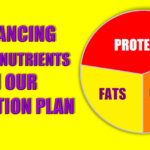
Protein — the Non-Negotiable Macronutrient
When resistance training, I aim for:
1.6–2.2 g protein per kg bodyweight (or, if you are above 70–75 kg, per kg of ideal body weight).
Without sufficient protein:
- Muscle protein synthesis declines
- Lean mass is at risk during deficits
- Recovery slows
- Structure erodes
Protein is not optional.
It is essential.
Especially after 40.
Personally, I reach my protein targets primarily through food and only rarely use supplements.
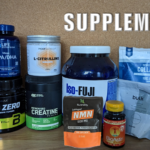
NMN + Glutathione — Optional Cellular Reinforcement
I also use:
- Sublingual NMN (250–500 mg)
- Glutathione support
These support NAD+ pathways and antioxidant defence systems.
Calorie deficits increase oxidative stress.
Forty-plus mitochondria are not as forgiving as twenty-plus mitochondria.
Are these required for fat loss?
No.
Are they strategic under higher stress conditions?
Possibly.
I treat them as reinforcement — not requirement.
Facial Muscle Work (Yes, Really)
Your face is not decoration.
It is layered anatomy — muscle, fat pads, connective tissue, skin.
Facial muscles are smaller than your glutes, but they are still muscles. They respond to circulation, stimulation, and use.
I regularly follow structured routines from DN Beauty Natural on YouTube:
These routines focus on:
- Improving circulation
- Supporting lymphatic drainage
- Encouraging muscle activation
- Reducing fluid stagnation
Are they magic?
No.
But neither is neglect.
Ignoring facial structure while aggressively dieting is like renovating a house and refusing to check the foundations.
Small, consistent inputs matter.
The Deeper Lesson
When I turned 40 in 2013, I felt depleted.
When I turned 45 in 2019, I decided to rebuild.
But rebuilding is not the same as shrinking.
At 45, I learned that fat loss without structure is erosion.
Now, at 50+, my goals are no longer aesthetic first.
They are performance-driven.
Heavier squats.
Stronger pulls.
Better recovery.
More muscle.
Because muscle is youth.
Not cosmetically.
Mechanically.
Metabolically.
Mitochondrially.
Muscle protects bone.
Muscle protects metabolism.
Muscle protects independence.
And yes — muscle protects structure.
If You’re 40+ and Want to Lose Fat
Don’t rush.
Research often suggests sustainable fat loss may fall around 0.5–1% of bodyweight per week.
But here is my personal remark:
It depends.
On training history.
On muscle mass.
On stress levels.
On hormonal landscape.
On how metabolically resilient you are.
In my experience, the slower the better.
Because slower loss preserves structure.
Build first.
Support connective tissue.
Eat enough protein.
Recover properly.
Then trim.
And if one day you glance down into a mirror and feel a flicker of Melisandre-level horror…
Pause.
It may not be ageing.
It may be structure.
Rebuild it.
***
I don’t just write about this — I live it.
If you want to see how this looks in real life, ask questions, or learn how to apply it to your body after 40/50, I host a private Facebook group: Fit Over 40 & 50 Ultimate Club.
👉 Join here: Fit Over 40 & 50 The Ultimate Club
***
Click here if you are interested how to build muscle at 40/50+.