
Supplements I Use After 40 for Fitness, Recovery and a Bit of Face Glow
Do We Need Supplements Or Not?
Well, this is an expensive investment compared to the gym membership and perhaps an odd workout with a coach. The most important question is – do we need them, or not?
In my opinion, the answer is – ‘Yes’ and ‘No’.
Why ‘Yes’? Since the extensive workouts 4-5-6 times a week will require fast recovery, which may not be possible if we get all the nutrients, vitamins, minerals, etc. only from food.
Why ‘No’? As long as our workouts do not put too much stress on our body, and there is enough time for a decent recovery, we most likely won’t need any supplements.
At the moment I take NMN and Collagen + Vitamin C every morning. After a meal, I take Omega 3. Sometimes, if I feel I need it, I take A-Z Multivitamins & Minerals. That’s it!
I do have BCAA and protein powder, and a cupboard full of other supplements, but, honestly I don’t use them.
Why did I choose exactly what I take now?
As with everything else, it is a trial and error process, still ongoing by the way.
Let’s go back to June 2019 and, of course, to the ‘Transform Yourself’ book – that’s the book (it is in Bulgarian) I bought at the start of my fitness journey. It is about setting goals, tracking progress, adjusting nutrition, creating and following a fitness routine, using some supplements.
Aha! Supplements
There were not one or two, but four chapters regarding the subject. You won’t be surprised that for most of the described supplements, there was information what their thermogenic effect (fat burning ability) was; whether it was clinically tested; and what other people said about it.
Therefore, it’s not surprising that the first supplement I bought was
L-Carnitine
It was described as a fat burner, and I didn’t want anything containing caffeine.
Did it work? I think, it worked in terms that some 10-15 minutes after taking it, I felt like I was injected with a cup of coffee – I felt fresh and as if I got connected to an extra power supply.
However, it wasn’t just thanks to the L-Carnitine itself – the liquid I was taking contained green tea as well, which also has a refreshing effect. As for whether it is a fat burner – I can’t really tell. My body fat was going down, but I was doing cardio and four – five workouts with weights in gym, I changed my nutrition, etc. Overall, instead of coffee – L-Carnitine is OK.
With that said, let’s move to:
Omega 3
By June 2019 I had already been taking two fish oil softgel capsules per day (each containing EPA/DHA – 180/120) nonstop for almost two years. I had read a few forum posts, by a user called Pink Panther, about the many benefits of the fatty acids, especially the fish oil ones.
Seeing that Pink Panther had estimated he needed 4 softgels per day, and he weighed around 100kg; I calculated that I had to take half the amount.
One particular reason I use Fish oil is because it has an anti-inflammatory effect on the body. Over the years, with all the heavy workouts, I increased the intake to Pink Panther’s: EPA/DHA – 720/480.
Nevertheless, fish oil didn’t help much when all gyms closed and I started running in the local park in late March 2020. I had that firm resolution to go outside and run every single day.
Said and done! Yet, within three or four days into the new routine I started waking up during the night because my knees were hurting. It was a sharp, acute pain, especially when I was fidgeting around in bed.
After some Google research, I decided I needed some
Collagen Supplement
Why? Collagen is a protein that is found in our skin, tendons, ligaments and bones; and it provides strength and support to these tissues.
Initially, I bought some tablets containing collagen Type II, which is found in cartilage – a connective tissue that helps the joints move smoothly. Nothing happened – the pain persisted since I stubbornly continued running.
Apparently, I had to do further research, which showed two things. First, I needed at least 6 grams of collagen a day, preferably 10 – 12g. I was taking only 2g. Second, collagen type I and III were way more effective in terms of supporting skin, tendons, ligaments, blood vessels, bones, and teeth.
Therefore, I bought some Hydrolysed Collagen Powder (Bovine) from Amazon, and after a week or so of taking 10g per day, the pain gradually reduced and eventually disappeared. I took collagen supplements non-stop for two years, alternating bovine and fish ones, or choosing different brands.
Then I read that every six – eight months it is good to have a break for a month or two, because the body adapts to the collagen supplements and they stop being effective. I must admit that I don’t have such big breaks – I would stop taking collagen for about two – three weeks every six months or so. It still works.
While doing the collagen research, I started wondering whether to try taking some
Whey Protein Powder
It can be beneficial for recovery after strength training and also for building muscle.
So, my Amazon orders archives show that I bought quite a few packs of different whey protein powder brands over time. I used to make protein shakes, or add some protein powder into meals, mainly desserts I cooked.
Gradually, I stopped using protein powder very often. I realized I could meet my daily protein needs simply by eating certain foods.
What’s more, you don’t have to devour large amounts of meat, fish, eggs and dairy products. Soya, beans, oats, even wheat also contain protein though you need a combination of them to get all of the eight essential amino acids.
Another supplement that gradually grew on me over the years was
BCAAs (Branched-Chain Amino Acids)
They stimulate the muscle protein synthesis; possibly reduce muscle breakdown; and support muscle repair and recovery after exercise.
A quick look on my past Amazon orders shows that on 5th March 2020 I first bought Biotech BCAA and I have been reordering them ever since. They contain the three most important amino-acids in ratio 2:1:1 – L-Leucine: L-Isoleucine: L-Valine; plus some L-Glutamine and Vitamin B6, which are good for post-workout recovery.
How do I take them? I would normally dissolve 6 – 7grams in about 250ml water and drink 1/3 of it before a workout as an energy boost, some during, and the rest immediately after the workout.
Recently, I started using BCAAs less often. Again, I rely on my nutrition to replenish the muscle glycogen stores. I realized that for building muscle, which is my aim at the moment, I need some fast carbs around a workout (for example a banana) rather than amino acids.
For a while, I also tried two other supplements before gym – when I felt low of energy, a bit tired, or I intended to lift heavy.
These were
L-Citrulline Malate and L-Arginire
They are both known as nitric oxide supplements or nitrogen boosters. They both are amino-acids, naturally found in our food. Sources of L-Citrulline are meat, beans, chickpeas, lentils, peas, nuts; and the sources of L-Arginine are: beef, lamb or pork meat, poultry, fish, dairy products.
So, the theory is that nitric oxide in the body relaxes and widens blood vessels, which enhances the delivery of oxygen and more blood (=food) to the muscles, and this is supposed to improve athletic performance and reduce soreness after a workout.
What does the practice, I mean my experience, say?
The first one I started taking was L-Citrulline Malate. If you do a Google search, it will show that Citrulline malate enhances athletic anaerobic performance and relieves muscle soreness. I don’t know about that, but I can tell you that it has such a strong acid-sour taste due to the malate that can give your brain a sharp kick and instantly wakes you up.
Then I watched a video with Boyan Ivanov. He is a Bulgarian bodybuilder who competes on an IFBB PRO level. I’m not aware what this level means but Boyan’s physique is pretty impressive – his muscles speak for themselves, sort of. Boyan said he preferred L-Arginine as a pre-work oxide booster, which cast me yet again in the Google pool to search for information about it.
I soon fished out that the most recommended form of this supplement is Arginine Alpha Ketoglutarater, and Amazon duly delivered me a small pack to try out.
Since I also read that Arginine and Citrulline have a synergistic effect, I started combining 3g of each dissolved in water about 30 minutes before a workout, and, yes, they have quite a smash-boosting effect. I like it! One more thing to mention – I don’t take this energy bursting mixture every day, only when I have planned a heavy workout and I am low of energy.
Thnakfully, my energy levels have been pretty high recently; I don’t even know where I stashed my Arginine and Citrulline supplements.
Another path my quest for supplements led me was to
Leuzea
Caution here! It contains naturally occurring steroids.
Nevertheless – don’t panic! These components have nothing to do with the anabolic ones, which are prescription-only medicines that are often taken without medical advice. I read that taking Leuzea tablets might increase muscle mass, improve athletic performance, or increase endurance, or do nothing of the above.
My Google digging unraveled that Leuzea is a source of Ecdysterone, which is a plant steroid hormone without (many) side effects; it has anabolic effects and improves the protein synthesis.
That sounded pretty intriguing, so I bought Leuzea Max tablets, each containing 200mg of Leuzea Cartamoides Root extract. I took one a day before workout, with some food containing mostly protein.
Sixty pills later, because I couldn’t see any effect, I doubled the dose taking two tablets a day for 15 days. Again nothing much happened and I, downheartedly, gave up.
Now, you might ask why a woman would need a testosterone booster – it’s the same reason for which a man would want it – it helps with the muscle growth. Women’s bodies also produce very small amounts of that hormone and if that production is helped a little – supposedly it will help building muscles… Supposedly!
I used to take for about 3 years one tablet x 4g Astaxanthin, which is an antioxidant and has nothing to do with fitness, just beauty. Astaxanthin has similar benefits as Resveratrol, Quercetin, and the like.
However, in June 2023 I switched to
NMN
NMN (Nicotinamide Mononucleotide) is a nucleotide derived from ribose and nicotinamide. It is a form of vitamin B3 (niacin) that serves as a precursor to NAD+. NMN is naturally synthesized in the body and is involved in the production of NAD+, a coenzyme essential for cellular metabolism and energy production.
One of the primary benefits of NMN supplementation is its ability to raise NAD+ levels in cells. NAD+ is crucial for mitochondrial function, DNA repair, and cellular energy production. As we age, NAD+ levels decline, which is associated with various age-related health issues.
NMN supplementation may help restore NAD+ levels and support cellular function. NAD+ is also important for maintaining neuronal health.
From personal experience, I can say, I see quite a few very positive effects of taking NMN; amongst them – I’m very relaxed, I have no anxiety issues, my stress levels are low.
To Sum Up
Ok, let’s sum up what supplements I take daily at present: ½ g Sublingual NMN in the morning, before food; then about 15 minutes later I take some Vitamin C and 13 – 14g powder Collagen dissolved in lukewarm water, and then I wait 40-60minutes before I eat/have coffee. After a meal, I take Omega 3 – EPA/DHA 720/480.
However, if the planned workout is heavy – I would take BCAA 2:1:1 – about 6g split before and after a workout and/or a mixture of Citrulline and Arginine. If I’ve worked too much, I’d take a Ca-Mg-Zn-Vit_D3 tablet in the evening (just Magnesium is also fine). I also have A-Z Multivitamins & Minerals but I only take them occasionally, for example when I’m getting a cold – I don’t think they are of much use to me otherwise.
UPDATE (2026): A Few Things I’ve Added Since Writing This
Since I originally wrote this article, my supplement routine has evolved a little.
The biggest addition has been Injuv® Hyaluronic Acid. Every morning, immediately after waking, I take 2 capsules (140 mg) before anything else.
One of the reasons is simple: as we age, our natural hyaluronic acid levels decline. Hyaluronic acid is remarkable because a single molecule can bind up to 1,000 times its own weight in water, helping support hydration throughout the body. For me, that means supporting not only my joints but also my skin, especially during periods of heavier training or when I’m eating in a slight calorie deficit.
I’ve also added NAC (N-acetyl cysteine) as part of my antioxidant support. NAC is a precursor to glutathione, one of the body’s most important endogenous antioxidants. Rather than taking glutathione alone, I like supporting my body’s own ability to produce it as well.
I also continue to take collagen peptides with vitamin C daily. While collagen supports connective tissue throughout the body, vitamin C is an essential co-factor for collagen synthesis, making the combination a permanent part of my routine.
Do I believe supplements replace good nutrition, resistance training, sleep, or sensible sun protection?
Absolutely not.
They are exactly what the name suggests: supplements. The foundations remain the same. Eat well. Lift weights. Recover properly. Then, if appropriate, use supplements to support those foundations.
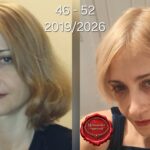
If you’re interested in why facial changes can happen after weight loss, especially after 40, and what I’ve personally done to help preserve skin quality while staying lean, I’ve written about it in much more detail here:
→ Why Your Face Changes When You Lose Weight After 40 (and What I Do to Help Preserve It)
P.S. Are you interested what to eat when?