How Your Bones Can Change with Exercise AT ANY AGE
…Plus those six-pack abs might show up, too…
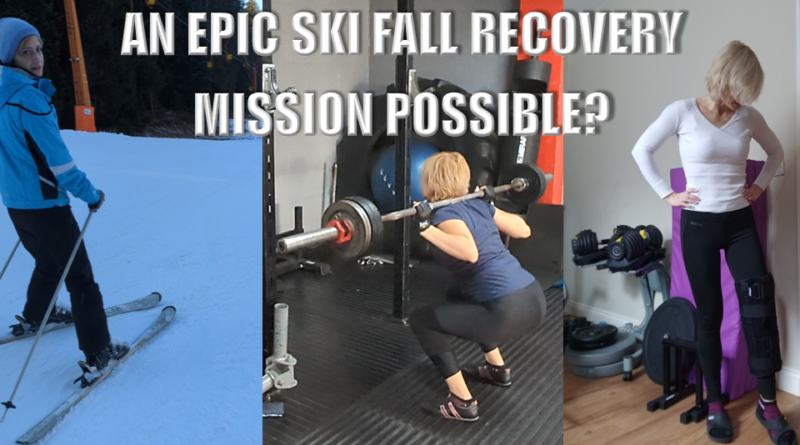
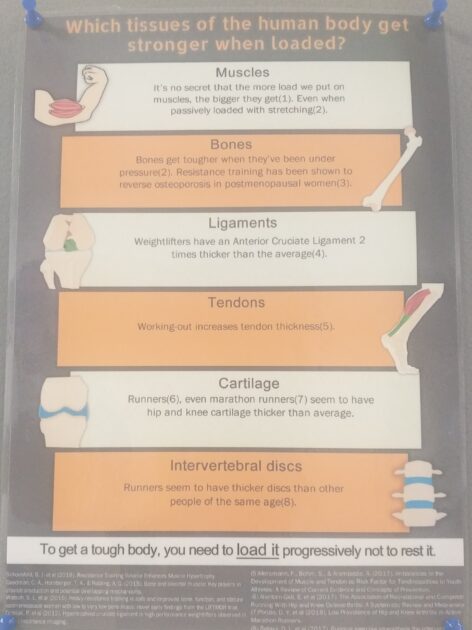
Have you ever had to go to hospital for physiotherapy? – No? – Lucky you…and not so lucky me J. After an epic ski fall in Feb 2022 I ended up one morning in our local orthopedic department, my left knee decorated with a splint, and me myself facing this poster:
To start with, I had somehow managed not to break any bones, but I had torn my ACL, meniscus and other stuff I couldn’t remember. To fast-forward a bit, my knee recovered 99% in about a year without any surgery, though the doctor offered me to think about having one.
How was this recovery possible?
Well, looking at the poster, I can see one possible explanation – I lift weights in gym six days a week most of the year and I run once a week. However, I do have periods without doing any workouts as well – I’m not a complete kind of idiotic fitness freak…
Nevertheless, I got back to my fitness routine as best I could just one week after the fall. Guess what I did the first day – LEGS, of course! I couldn’t possibly get to the gym but thanks to the lockdowns I got plenty of equipment at home. So, I only had to drag my left leg to the dining room (don’t get its name wrong – no one’s dining in there) and started a workout. Wow, the PAIN, the pain was strong but my stubbornness was even stronger!
Therefore, by the time I had finally referred to physiotherapy, about two months after the fall, my knee had already considerably improved. The swelling was almost gone and I had regained some flexibility. What’s more – I had even started going to the gym, a bit in a slo-mo, but still…
Why were my muscles getting back on track so fast?
The answer is in the poster.
Muscles, tendons and ligaments are getting thicker and stronger when we train with weights. After an injury, the injured tissue will be destroyed and replaced by living tissue in our bodies. By doing some lighter weight workouts the blood circulation in our muscles, tendons and ligaments gets increased. That leads to better supply of nutrients and oxygen needed for healing. Et voilà!
Why didn’t I break any bones?
I got lucky, I guess, but I also think – the answer is in the poster.
Muscles, tendons and ligaments are getting thicker and stronger when we train with weights. After an injury, the injured tissue will be destroyed and replaced by living tissue in our bodies. By doing some lighter weight workouts the blood circulation in our muscles, tendons and ligaments gets increased. That leads to better supply of nutrients and oxygen needed for healing. Et voilà!
Bones get tougher when they have been under pressure, and my bones have been subjected to some quite constant, considerable pressure since June 2019 when I stared regular resistance training in the gym.
Our bones are living tissues that are constantly rebuilding in a process called bone remodeling. This process helps maintain the strength and density of our bones; and it’s influenced by a variety of factors, including our genetics, diet, and … physical activity.
When we exercise, we subject our bones to stress, which stimulates them to produce more bone tissue and become stronger. Weight-bearing exercises, such as running, jumping, and lifting weights, are particularly effective at provoking bone growth because they require your bones to bear the weight of your body, plus an external load when we use weights.
As you engage in weight-bearing exercise, your bones experience small amounts of stress, which cause them to adapt by creating more cells and increasing their density. Over time, this leads to stronger, denser bones that are better able to withstand the stress of physical activity and everyday movements… and some epic ski falls!
Here comes the question – what are the types of exercise for stronger bones?
The answer is – weight-bearing exercises.
One such is type is progressive overload training where you are gradually increasing the demands placed on your body during exercise over time. This can involve increasing the weight you lift, the number of repetitions you perform, or the intensity or duration of your workouts. By steadily increasing the stress on your bones, you stimulate them to produce more bone tissue and become stronger.
Now look at the poster again. Resistance training has been shown to reverse osteoporosis in post-menopausal women. I would say that even non-menopausal weight lifting people can reverse and even avoid osteoporosis and that’s some relief!!!
Other types of weight-bearing exercise are running, jogging, jumping rope, hiking with a weighted backpack, stair climbing with added weight, and so on. Though these aren’t exactly my favourites, if you prefer them – give them a go. I do run or jog a few times a week (well, not with the injured knee).
Another thing that is important to note is that the benefits of exercise on bone health are most effective when combined with a healthy diet that includes adequate amounts of calcium and vitamin D. Calcium is a key nutrient for bone health, as it helps build and maintain bone tissue, while vitamin D is necessary for the body to absorb calcium. I would also recommend taking some collagen supplement if you are over 40.
In conclusion…
In conclusion, if you want to improve your bone health, it’s important to engage in weight-bearing exercises and other physical activities that challenge your bones. By doing so, you’ll not only build stronger bones but you will also reduce the risk of falls and fractures as you age. So, get training and start reaping the benefits of physical activity on your bone health today!
Please, please don’t break a leg (literally🙂) and good luck!
P.S. Are you interested how to build muscle and strengthen your bones even if you are 45 – 50+? Read here.