
How to Build Muscle at the Age of 45 – 50 Plus?
Is gaining muscle mass as we age even possible?
Yes, it is! We can build muscle at any age, even if we have never trained before. Perhaps, it will take a bit more time, but here is the good news: once we start progressive overload training, we also start expanding our life span. That somewhat answers the question:
Why should we build muscles as we age?
Apart from living longer, we will also live a better-quality life because our bodies will become stronger. That doesn’t only mean that we’ll be able to lift heavier objects, but we also will be able to perform everyday tasks more easily. Taking up new hobbies involving good strength and balance won’t be a problem.
Furthermore, training with weights improves bone density and reduces the risk of osteoporosis. Bone is a living tissue that responds to exercise and becomes stronger.
The cherry of the ice-cream, of course, is the increased metabolism, because muscle tissue is more metabolically active than fat tissue and it burns more calories even when we rest. Nice! Eat more and get lean sounds like a perfect plan!
The last but not least positive effect is the improved mental health and reduced levels of stress and anxiety. During strength training our body releases endorphins to subdue the pain and discomfort, but that also leads to increased feeling of pleasure and happiness. With that said…
Let’s get down to business and focus on how to build some muscle mass!
1. Choose a Gym
First, go out and choose a gym, preferably with as many machines as possible. Don’t count the number of the treadmills, it is not important – we are going to lift weights – most of the time!
Additionally, it would be great if there are least 3 – 4 incline benches, plus 3 – 4 benches with barbell stands. You are not going to use all of them at the same time, but more benches equal less time to wait to use them if the gym gets crowded.
One more thing – the closer the gym is to your home – the better. This way you will find less excuse not to go – that’s proven in person!
2. Build a Workout Program
So, what are you going to do in the gym? It largely depends whether you have any previous experience – but let’s assume you have not.
Hence, start with going 3 times a week – for instance on Monday, Wednesday and Friday, because you will need at least a day recovery between two workouts.
Start building a whole body routine that may have slightly different exercises each of the three days. However, it should include 2 leg exercises (for quadriceps and hamstrings), 2 back exercises, 2 chest ones; optional – one biceps and one triceps exercise. You may include one glutes and one abs exercise -twice a week is enough for a start. The whole workout should take around 50 minutes to an hour.
While you are a beginner, I would suggest warming up before a workout – do 10 minutes fast walk or not a very fast run on the treadmill. Alternatively, walk fast before you hit the gym as I do.
Furthermore, doing either some dynamic stretching of the muscle groups involved or a warm-up set with light weight before each exercise is also a good idea.
Once you get used to the whole body routine, it’s time to start tweaking the workouts, for example making them four per week – 2 days lower body (both days – legs and glutes), 2 days upper body (one day – back and biceps, one day – chest and triceps). Alternate lower and upper body days – for example Monday – lower body, Tuesday – upper body, Thursday – lower body, Friday – upper body.
The next question is – how many sets and repetitions and how heavy?
Usually, 3 – 4 sets per exercise are enough. As for repetitions per set – aim at 8 -12 for the upper body and 12 – 15 for the lower body. The weight should be such that it challenges you during the final repetition or two of each set.
So, if you find that your body has adapted to certain weight, you will have to give it a more challenging task. You may start by increasing the repetitions (for example – from 8 to 10, then 12reps/upper body, or from 12 to 15/lower body).
If it gets easy again – then increase the weight for one or two of the sets and do fewer reps (for instance 6-8/upper body; 8-10/lower body). Depending how much weight you have added – you may decrease the number of reps even more.
In time, you will find that for the most of the exercises for bigger muscle groups the best way to progress is to have one set with some light weight and more reps as a warm-up; two sets with moderate weight and normal range of reps; and one set with heavy weight and fewer reps.
That will bring up the question how much to rest between sets. The answer is – the heavier the weight, the longer the pause. Leave your body to guide you – you will soon find out when it’s time for the next set.
Another thing to take into consideration is that exercises involving more muscles or bigger muscle groups should be done first because we want to do heavier work while we are still fresh.
I will write some more articles giving details how to twitch and tweak the workouts – I will leave links at the bottom once I’ve done them.
3. Create a Nutrition Plan
First of all, eat enough protein. I would advise to aim to get at least 1 gram of protein per pound (or 2 grams per kilogram) of body weight each day.
Protein intake is extremely important before and after a workout. However, so are the carbohydrates (carbs). Carbohydrates are an essential source of energy for training. Whereas protein is important for muscle building and repair, carbs replenish the muscles glycogen stores during and after a workout.
In view of that, I would suggest eating some 20-30g protein (for example Skyr) and fruit (like half a banana or an apple, or a few grapes) an hour before and half an hour after gym. Avoid fats intake around a workout – they could slow the metabolism of protein and carbs.
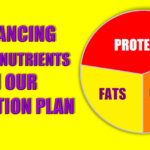
Most bodybuilders use the rule 40% protein, 40% carbs, 20% fats per day when they are building muscles but also don’t want to put on much extra weight (I mean fat).
Nevertheless, try to avoid sugar, sunflower oil, soft drinks, processed foods which a rich in transfats. Instead, you could try stevia, olive oil, foods rich in Omega 3.
So, what to eat then?
As a protein source – eggs, Skyr, quark, lean beef mince, chicken breasts, diced beef, cooled salmon fillet (also rich in Omega 3). Don’t forget that oats, soya beans, peas, beans, peanut and almond butter also contain protein, which is best absorbed if combined with vegetables or dairy products.
Which means that veggies should be present in your plan as well – tomatoes, cucumbers, lettuce, spring onions, cauliflower, broccoli, carrots, mushrooms, green beans, corn, etc. Do not forget fruit as well – apples, bananas, blackberries, oranges, strawberries, raspberries, cherries, watermelon, melon – whatever you like.
One not so well known but a very important fact is that if you combine foods rich in fibres, such as fruit and vegetables, with foods rich in carbs, for example bread, the carbs get absorbed slower and you will not feel hungry for a longer period. It helps if you are trying to lose some weight.
As for how many calories per day you need, that depends on whether you want to lose, maintain or gain weight. There are different calculators available online. No matter which one you choose, please bear in mind that that’s just a rough estimation of how many calories you will need.
Each person’s metabolism is different depending on many factors. The best strategy is to introduce some changes in your nutrition and wait 10 -14 days to see the outcome. Then, twitch and tweak again, and again.
Don’t forget to stay hydrated!
More articles about nutrition are coming soon – I will leave links at the bottom once I’ve written them.
4. Get Enough Rest
Muscle growth happens more as we sleep than as we train – fact! When we lift weights, the strain causes small tears in our muscle fibres. Our body will repair the tears and the muscles will get thicker and grow but it takes time.
Not having enough rest between workouts will most certainly slow our progress because we will feel tired and respectively will underperform in gym, not to mention that we may injure ourselves.
Training causes hormonal changes in the body, usually good ones, but it also increases cortisol, which can have negative effects if not balanced with adequate rest and recovery. Therefore, adequate sleep is essential for muscle repair and growth, hormone balance, and our overall health.
How much rest do we need? Usually, beginners need at least a day between two workouts. As we are getting more advanced, we will be able to train for two days and rest one. When we progress further, we will be able to train 5-6 days per week nonstop for a certain period of time 4 – 6 – max 8 weeks, and after that we will need 7 -10 days to rest and recover.
Yet, what to do during the rest days? Well, it depends on whether you want to lose some extra fat; or you would like to stay active all week round; or you just want to sit and relax. Anything from running in park, walking, swimming, doing whatever outdoor activities you like, or just lying on the sofa is fine.
5. Stay Consistent and Track your Progress
Eat, Train, Sleep, Repeat
Once we incorporate our Building-Muscle-Agenda in our lives, we need to stay consistent, or we won’t see much result.
How to measure our progress?
Keep track of your workout sessions – record what exercises you do, the weights and reps – this will allow you to see how much you have progressed over time. As you become more experienced in gym, you may start recording your strength: do a 1-rep max test or a 3-5 rep max test per exercise, to test your strength and track it over time.
Take measurements of your body (e.g. waist, hips, chest, arms, legs, etc.) and track the changes over time to see if you are gaining muscle mass. Use a scale to track your weight, but bear in mind that muscles weigh more than fat. Furthermore, our bodies retain water while we train and once we stop – it comes out (and we may lose up to a kilogram or even more in a manner of a few days).
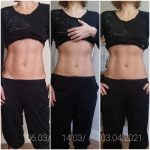
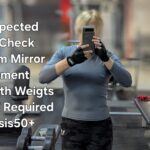
That’s why, a better way to see the changes in your body is to take progress photos of yourself at regular intervals and compare them side by side with your old ones.
In Conclusion
I hope now you have an idea how we build muscle at the age of 45-50 plus. It’s more or less the same as before that age. How long it will take depends on your initial fitness level, not your age.
If you develop the habit to go to the gym and train – you are, eventually, going to like it. Be patient and persistent, experiment. Endorphins are addictive and there’s a good chance that at one point you might find it hard to stop yourself from overtraining.
Don’t forget the most important thing – HAVE FUN & ENJOY THE PROCESS 💪😀!
P.S. My Story
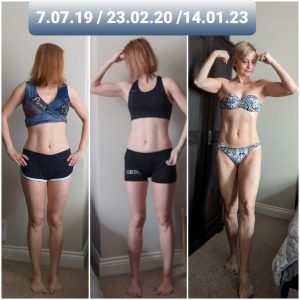
You may also like to watch: Part I and Part II of THE PLAN how to get in a great shape at the age of 40+, 50+ and beyond even if you have never trained anything before. In the following videos, I give some answers to two of the most commonly asked questions on Google search: How to lose weight? / How to get in shape?